
Not just particle size: How does the microstructure of aluminum-silver paste reshape the properties of metal coatings
In the formulation development of metallic effect coatings, R&D engineers often face such confusion: Why are the optical effects of two kinds of aluminum paste with similar particle size distribution completely different after spraying in the same resin system? One shows a deep mirror texture, while the other shines with a little metallic light. More interestingly, when trying to make up for the difference in effect by adjusting the particle size, it is often found that this is not a simple "thickness" problem-some fine-grained aluminum powder still flashes, while some coarse-grained aluminum powder does not.
Behind this confusion, it points to a core variable that is often neglected: the micro-geometric shape of aluminum sheet. The particle size distribution determines the "size" of flash point, while the micro-morphology determines the "mode" of light reflection. In this paper, the micro-morphology classification system of aluminum-silver paste is systematically combed, from forming mechanism, optical behavior to formula selection, which provides a technical judgment framework for accurate selection of metal effect coatings.
01
Microscopic morphology of aluminum-silver paste
The "micro-morphology" of aluminum paste refers to the three-dimensional geometric characteristics of aluminum sheet, which mainly includes the following three-dimensional parameters:
Thickness-diameter ratio: the ratio of the diameter to the thickness of aluminum sheet determines the "fat" degree of aluminum sheet.
Edge contour: the regularity of the edge of aluminum sheet, which is smooth, round or irregular and serrated.
Surface flatness: the degree of micro-fluctuation on the surface of aluminum sheet
These three dimensions together constitute the "morphological fingerprint" of aluminum sheet, and directly determine its optical behavior in the coating. It should be emphasized that microscopic morphology and particle size distribution are two independent variables-aluminum powder with the same particle size distribution can produce completely different visual effects due to morphological differences.
02
Classification and difference: two typical microstructures
The micro-morphology of aluminum-silver paste is a continuous pedigree, but in technical practice, two extreme types are usually used as classification criteria-silver dollar type and corn flake type. There are systematic differences between them in forming mechanism, geometric characteristics and optical behavior.
2.1 Silver dollar structure
Forming path
Silver-element aluminum sheet is prepared by silver-element grinding process, and the grinding medium ratio and process parameters are accurately controlled, so that the aluminum sheet mainly undergoes "bending-flattening" deformation during grinding, rather than tearing and crushing.
geometrical characteristic
· The thickness and diameter are relatively high, and the aluminum sheet is thick and evenly distributed.
· Smooth edges, arc-shaped transition.
· Smooth surface, no obvious wrinkles.
· The particle size distribution is narrow and the particle size is highly uniform.
Optical behavior basis
The regular geometric structure makes the silver-element-type aluminum sheets present the characteristics of "consistent directional arrangement" in the coating-almost all aluminum sheets lie flat in the coating at the same angle, forming a nearly perfect parallel arrangement.
2.2 Corn flake structure
Forming path
Corn flakes are prepared by traditional ball milling process. During the grinding process, the aluminum foil mainly undergoes "tearing-crushing" deformation, forming fragmented particles with irregular edges.
geometrical characteristic
· The thickness and diameter are relatively low, and the aluminum sheet is thin and uneven.
· The edge is irregular and serrated.
· There are microscopic folds on the surface.
· The particle size distribution is relatively wide.
Optical behavior basis
The irregular structure leads to the scattered arrangement and orientation of corn flake aluminum in the coating-some aluminum flakes lie flat and some are inclined, forming a multi-angle reflecting surface.
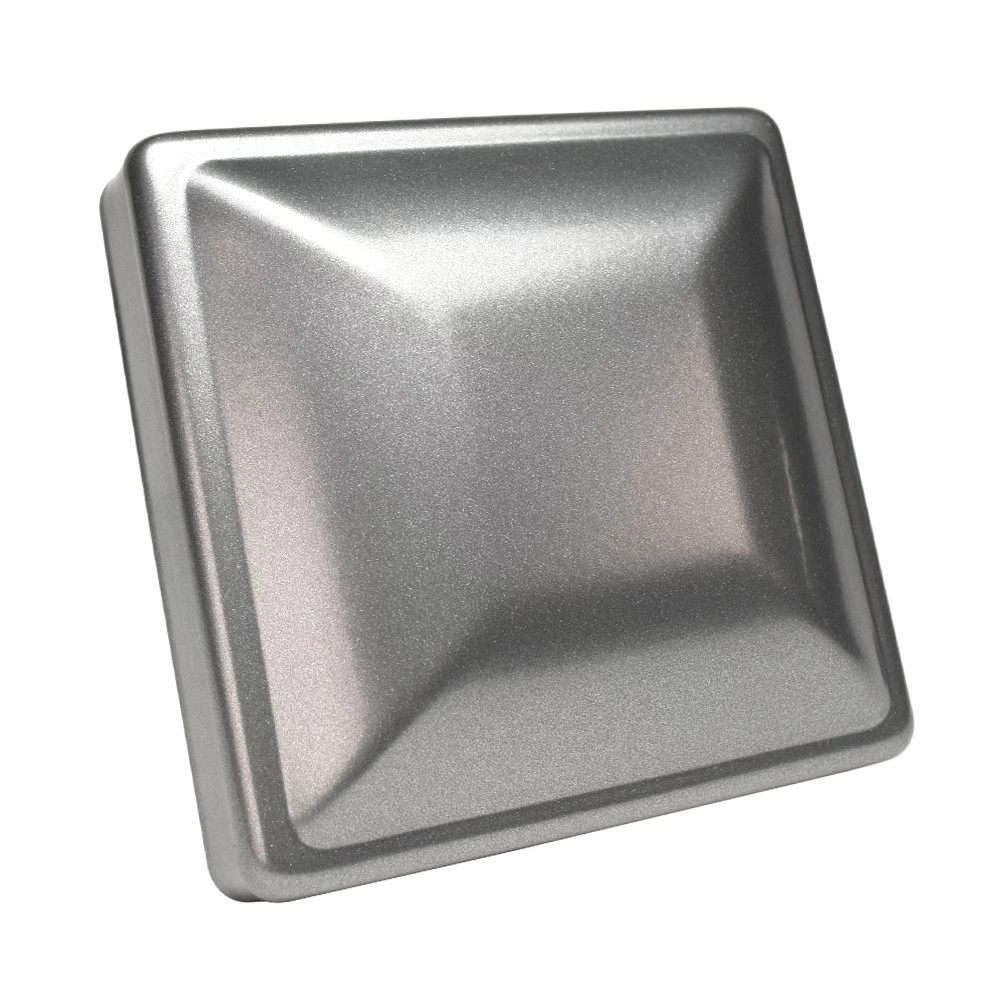
2.3 Morphological Pedigree and Transition Types
It should be emphasized that the silver dollar type and the cornflake type represent the two ends of the pedigree, and there is a continuous transition area in the middle. Common transition types include:
· Thick sheet: It has certain thickness uniformity and edge regularity.
· Fine-grained type: A corn flake variant with extremely fine particle size, and the edge irregularity decreases with the decrease of particle size.
· Polishing type: an improved shape that modifies edge defects through post-treatment.
The existence of these transitional types provides more precise control space for formula design.
03
Mechanism layer: how does morphology determine optical behavior
3.1 Geometric basis of light reflection
The optical behavior of aluminum sheet in coating follows the basic principle of geometric optics. When light shines on the surface of aluminum sheet, the direction of reflected light depends on two factors: the angle of incident light and the normal direction of aluminum sheet surface.
For silver-based aluminum sheets, due to their regular geometric structure and excellent directional arrangement, the surface normals of all aluminum sheets are basically parallel to the coating normals. This means that at a fixed viewing angle, the reflected light received by the observer comes from the regular specular reflection of the aluminum sheet, showing a concentrated highlight reflection.
For corn flakes, due to irregular edges and scattered arrangement orientation, the surface normals of aluminum flakes are statistically distributed. The incident light is scattered and reflected to different directions, forming a diffuse scattering effect. Observers can receive reflected light at different angles, but the brightness of each angle is relatively uniform.
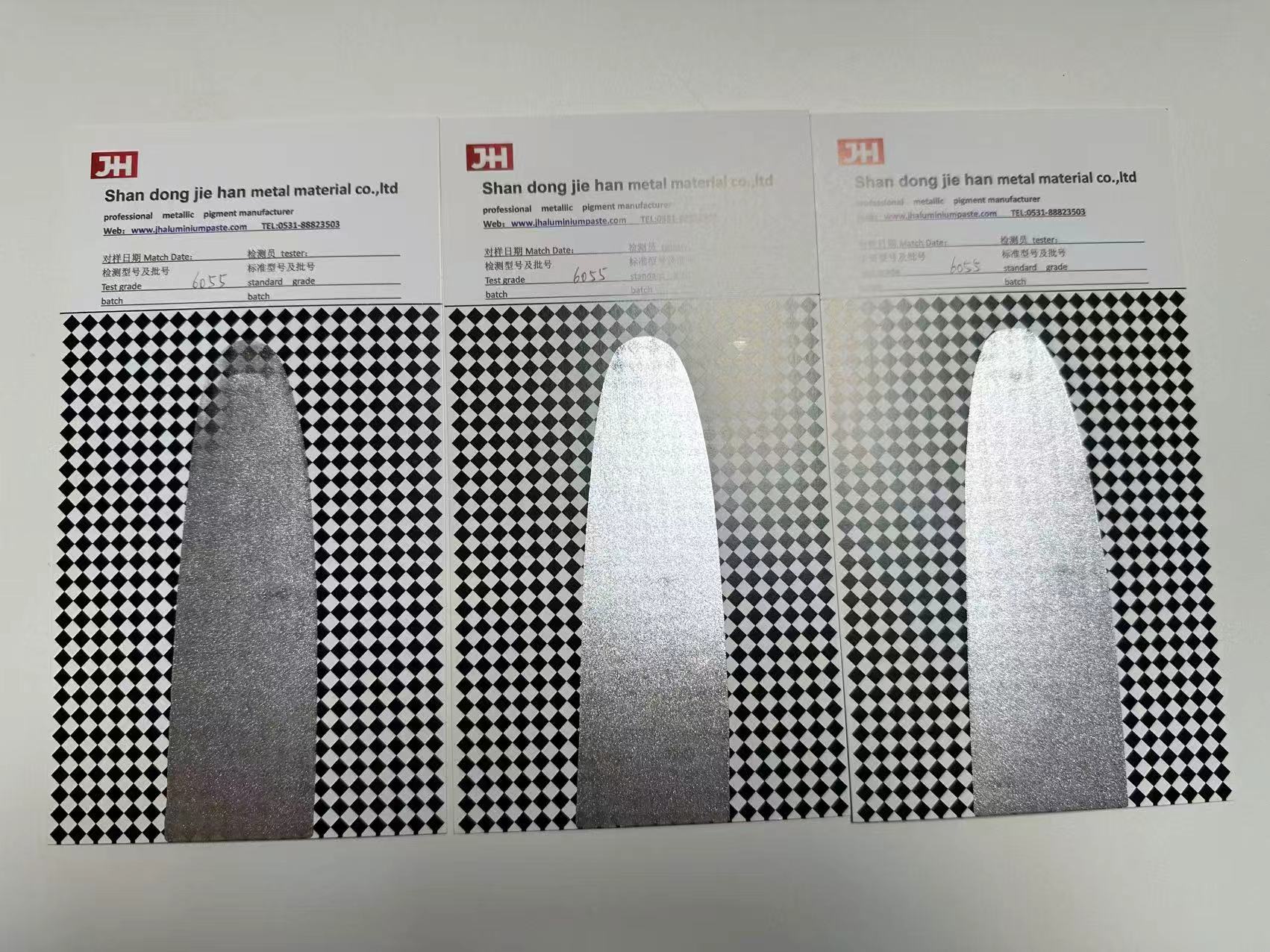
3.2 Key variable: contribution of edge contour
The contribution of edge contour to optical behavior is often underestimated. The smooth edge of the silver element makes the light "guided reflection" at the edge of the aluminum sheet-the reflection direction is basically the same as the main reflection surface, and no stray light is produced. The irregular edge of the cornflake shape becomes a "secondary light source"-the light scatters in many directions at the edge, forming a flashing point.
Core insight: This mechanism explains why the fine-grained corn flakes still have a flicker, while the coarse-grained silver flakes still maintain a mirror effect-the core of flicker is the regularity of the edge contour, not the size of aluminum flakes.
3.3 Physical Mechanism of Directional Arrangement
The directional arrangement of aluminum sheets in wet film is driven by two factors:
Fluid shear force in settling process
The silver element is thick and uniform, and it is easy to rotate to the lowest energy state (flat position) under the action of shear force.
Capillary force during film shrinkage
The thickness of the silver dollar type is uniform, and the force is balanced during contraction, so it is not easy to tilt.
Because of the uneven thickness of corn flakes, it is easy to produce deflection torque in the process of fluid shear and capillary contraction, which leads to the dispersion of arrangement orientation.
04
Key trade-off: the inherent contradiction between performance target and morphology selection
The choice of micro-morphology is not a simple "good or bad" problem, but a trade-off of performance goals. The same shape cannot meet all performance requirements at the same time, so the formula design must make a trade-off.
4.1 the opposition between whiteness and flicker
Silver dollar path
· Advantages: high whiteness, high brightness, and strong color effect with angle.
· Cost: weak flicker, lack of "shining" visual effect of metal particles.
· Applicable scene: high-end topcoat with deep texture and mirror effect.
·
Corn flake path
· Advantages: strong flicker, obvious visual impact of metal particles.
· Cost: the whiteness is relatively low, and the effect of color change with angle is weak.
· Applicable scene: the topcoat with dazzling effect and high visual recognition is pursued.
· 4.2 the balance between hiding power and transparency
The influence logic of film thickness:
· Flakes (corn flake tendency): there are many aluminum flakes per unit mass, with many overlapping layers and strong physical hiding power.
· Thick sheet (silver dollar type tendency): the number of aluminum sheets per unit mass is small, but the single sheet has high reflectivity and strong optical hiding power.
Formula judgment: when the substrate color is dark or needs to be completely covered, the flake corn flake type has more advantages; When pursuing the "depth" of the coating and the texture of transparent metal, the thick silver dollar type is more suitable.
4.3 the contradiction between directionality and construction tolerance
The high directional arrangement of silver dollar type depends on the precise control of construction conditions-the fluctuation of parameters such as spraying viscosity, solvent evaporation rate and film thickness will significantly affect the final arrangement effect. The sensitivity of corn flakes to construction parameters is relatively low, and the dispersed orientation makes them maintain relatively stable visual effects under different construction conditions.
This means that although the silver dollar type can achieve the ultimate effect, it requires strict construction technology; Although the "upper limit" of corn flake type is low, the process flexibility is high.
05
Differentiation goal of application dimension
There are systematic differences in the attention to the micro-morphology of aluminum paste in different application fields, which provides a judgment framework for formulation engineers to "reverse the selection of morphology based on application objectives".
5.1 Automobile Original Paint
Core concerns: angle-dependent color effect, freshness and long-term weather resistance.
Morphological tendency: silver dollar type is dominant
The original automobile paint pursues the "deep feeling" and "flowing feeling" of the paint surface-the light transits smoothly with the change of the body curve, which requires the aluminum sheets to have excellent directional alignment consistency, and the silver dollar type is the basis to achieve this goal. At the same time, automobile paint needs to be protected by finish varnish, and the aluminum sheet does not need to be exposed to the topmost layer. The silver dollar type has the highest optical efficiency after being wrapped by resin.
5.2 Motorcycle/Electric Vehicle Paint
Core concerns: visual impact, metallic flicker, and cost performance.
Morphological tendency: corn flake type or thick flake transition type
Motorcycle paint needs to attract visual attention even at rest, and a strong sense of metal flicker is the key. The edge scattering effect of corn flakes just meets this demand. At the same time, motorcycle paint has lower requirements for the color effect with angle than automobile paint, and can accept certain orientation dispersion.
5.3 3C product plastic paint
Core concerns: surface fineness, whiteness and hiding power
Morphology tendency: fine-grained silver element type or high whiteness fine silver.
3C products such as mobile phone case and notebook case have extremely high requirements on surface touch, and any graininess will be regarded as a defect. This requires that the aluminum sheet must be extremely thin while maintaining high whiteness to cover the dark plastic substrate. Fine silver dollar or high whiteness fine silver is the mainstream choice-they not only have the advantage of high whiteness of silver dollar, but also do not affect the surface smoothness because of their small particle size. Baidaotu workshop
5.4 Imitation electroplating decorative paint
Core concerns: mirror effect, chrome-plated texture and metallic feeling.
Morphological tendency: extreme silver dollar type or mercerized type transition
Imitation of electroplating paint pursues the mirror reflection effect close to that of chromium plating, which requires that the arrangement of aluminum sheets must be extremely regular and the surface reflectivity should be maximized. Silver dollar type is the foundation, but it also needs the surface flatness of aluminum sheet to reach the extreme, and the particle size distribution is extremely narrow to avoid any stray light.
5.5 Functional Anticorrosive Coatings
Core concerns: physical shielding effect, weather resistance and reflective heat insulation.
Morphological tendency: floating type (special shape, not included in the classification of silver dollar/cornflakes)
Functional anticorrosive coatings need aluminum flakes to float on the coating surface to form a physical barrier, which requires aluminum flakes to have floating characteristics-a special surface treatment form, which does not belong to the category of silver dollar/corn flakes classification. However, it is worth noting that even in the floating system, the basic morphology (thickness and edge regularity) of aluminum sheet will still affect its floating stability and reflection efficiency.
06
Conclusion: Methodological regression from "selecting products" to "judging paths"
The micromorphology of aluminum-silver paste should not be simplified as a binary judgment of "silver dollar type is better or corn flake type is better". Through the combing of this paper, we can extract the following technical judgment framework:
The first level: clarify the demand objectives.
· Deep mirror texture → pay attention to directional arrangement ability
· To flicker the metallic feeling → Pay attention to the edge contour regularity.
· Want high hiding power → Pay attention to the matching of tablet thickness and particle size.
The second layer: understanding the trade-off relationship.
· High whiteness is often accompanied by low flicker.
· Strong orientation is often accompanied by construction sensitivity.
· High hiding power (physics) is opposed to high transparency.
Layer 3: Back to test and verification.
The final effect of micro-morphology must be verified under specific resin system and construction conditions. The particle size data provided by SDS/TDS is an important reference, but it can't replace the actual spraying test-because aluminum powder with the same particle size distribution may have completely different optical performance due to morphological differences.
Summary: the formula is extremely advanced.
The choice of micro-morphology of aluminum paste is one of the most easily overlooked but key decisions in the formulation design of metal effect coatings. Understanding the essential difference between silver dollar type and corn flake type, mastering the corresponding relationship between morphology and optical behavior, and establishing the technical judgment framework of "requirement-morphology-verification" are the only way for recipe engineers to move from "product selection" to "judgment path".