Aluminum Pigments: Characteristics, Application in Polymers and Visual Effects
Among many polymers, aluminum pigment is widely used, which brings both aesthetic and functional values to products. There are many kinds of aluminum pigments, each of which shows a unique visual effect or functional characteristics. For plastic applications, aluminum pigments often appear in the form of powders or particles impregnated with plasticizers, in which the flakes are closely combined with solid resins.
Among many polymers, aluminum pigment is widely used, which brings both aesthetic and functional values to products. There are many kinds of aluminum pigments, each of which shows a unique visual effect or functional characteristics. For plastic applications, aluminum pigments often appear in the form of powders or particles impregnated with plasticizers, in which the flakes are closely combined with solid resins.
In the application of plastics, the grinding solvent needs to be replaced by a medium or carrier compatible with the chemical properties of polymers and subsequent processing applications. Usually, the grinding solvent is replaced by liquid plasticizer (such as mineral oil or phthalate) or solid resin.
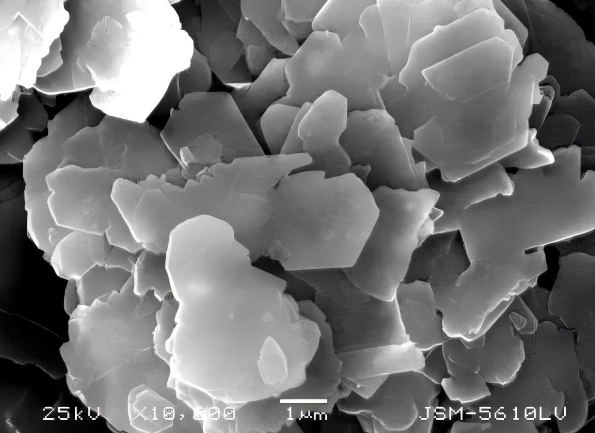
Geometric shape has a significant influence on the effect of aluminum pigment. The following characteristics help to distinguish different types of aluminum pigments.
The median particle size, usually measured in microns, reflects the average cross-sectional length of aluminum pigments. Particle size value is usually expressed by D(50%), that is, 50% of the flakes in the distribution are large and 50% are small.
Generally speaking, the grade with larger particle size is more shiny, reflective and shiny than the grade with smaller particle size.
The aspect ratio is obtained by dividing the cross-sectional thickness (t) by the cross-sectional length (d), and an aspect ratio of 100 to over 1000 is typical for most ground aluminum pigments.
Aluminum pigments with high aspect ratio usually have larger surface area, so they have stronger covering power. In addition, the hiding power of aluminum pigment grade is also affected by its particle size distribution.
Particle size distribution measures the difference between the maximum and minimum flake sizes in a specific grade. Particle size distribution varies with grades.
Generally speaking, aluminum pigments with wide distribution have higher hiding power and coverage, but the color is not pure enough when combined with color pigments. On the contrary, aluminum pigment grades with narrow distribution range can produce purer colors when combined with transparent pigments or dyes, but higher loading levels are needed to achieve opacity.
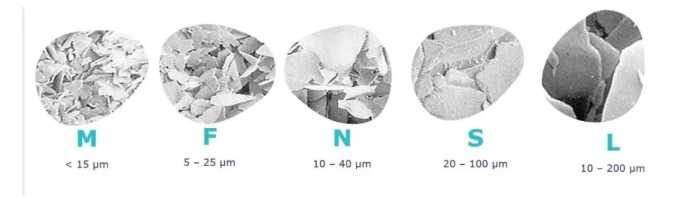
glitter
Aluminum pigments add metallic beauty to polymers. Various grades of aluminum pigments have their own characteristics and rich visual expressions, which can be summarized as the following five major effects:
Flash effect shows rough flash and dazzling metallic texture, which is often used to enhance the stereoscopic effect of objects while retaining the transparency of polymers. With the help of transparent pigments or dyes, this effect can be made more attractive.
Metal light
The metallic light effect presents a soft and translucent metallic appearance, which is similar to that of pearlescent pigments. To achieve this effect, it is necessary to select suitable aluminum pigments and mix them with transparent colorants in a very low proportion.
Accurate flash
The precise flash effect is unique in that the aluminum pigment used for manufacturing has a spherical and polished surface. This effect is manifested in a series of accurate scintillation light reflections, which adds "depth" to the transparent polymer. When used with transparent colorants, it is especially obvious under strong light. In addition, it can effectively reduce the streamline phenomenon in injection molding.
hot metal
The liquid metal effect presents a bright metallic texture, creating a pure metallic appearance like brushed aluminum or polished steel. It is characterized by a mirror-smooth liquid metallic luster and a controlled particle or particle-free state. The aluminum pigment used to achieve the effect of liquid metal gives the polymer a solid metal-like appearance.
High flash
High-flash effect is a traditional display of metallic texture, with strong metallic luster and obvious graininess. Combined with transparent or colored pigments (whether transparent or not), it can create a unique metallic luster and flash effect.