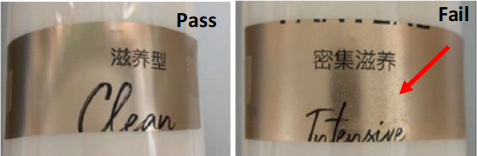
Aluminum paste test meter for alkali resistance
Test Method for Resistance to Alkali Corrosion of Household and Personal Care Labels
Principle and Scope:
This testing method is designed to predict the alkali resistance of printed samples. The samples are specifically formulated to contain aluminum pigments and can be metallic inks, cold foils, or heat-set inks (depending on the use of aluminum as the raw material to achieve a metallic effect).
Testing equipment and chemicals
1. Glass slide - size 2.5 x 7.5 centimeters.
2. Petri dish - large enough to accommodate the glass slide.
3. Pipette - capacity 3 milliliters.
4. Reagents - alkaline test uses 1% w/v NaOH solution
Test purpose:
When the products represented by the labels in the market are alkaline in nature, the test is conducted to identify the printed labels and ensure their stability in an alkaline environment. The test samples should be selected from the complete printed design, and proper drying and curing of the ink should be carried out before the test.
Test Instructions:
1. Select 5 samples for testing. The shrink sleeve labels need to be shrunk using the final shrink machine before making the test samples.
2. Cut the samples into 3 x 8 centimeters.
3. Place the samples in a petri dish, turning the printed or evaluated side upwards.
4. Drop a drop of reagent on the evaluated area of the sample.
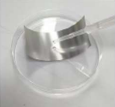
5. Place the slide over the droplet and ensure that the reagent spreads and covers the assessment area.
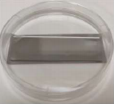
6. Cover the petri dish lid and let it stand for 12 minutes.
7. Rinse the reagent from the test sample with running water and dry the sample with a cotton swab. Be careful not to leave any scratches.
8. Observe the result on the front label in the test area.
Success criteria:
Turn the label face upwards, place it on an opaque white surface, and then determine the corrosion resistance result. Check the corrosion condition of the test label.