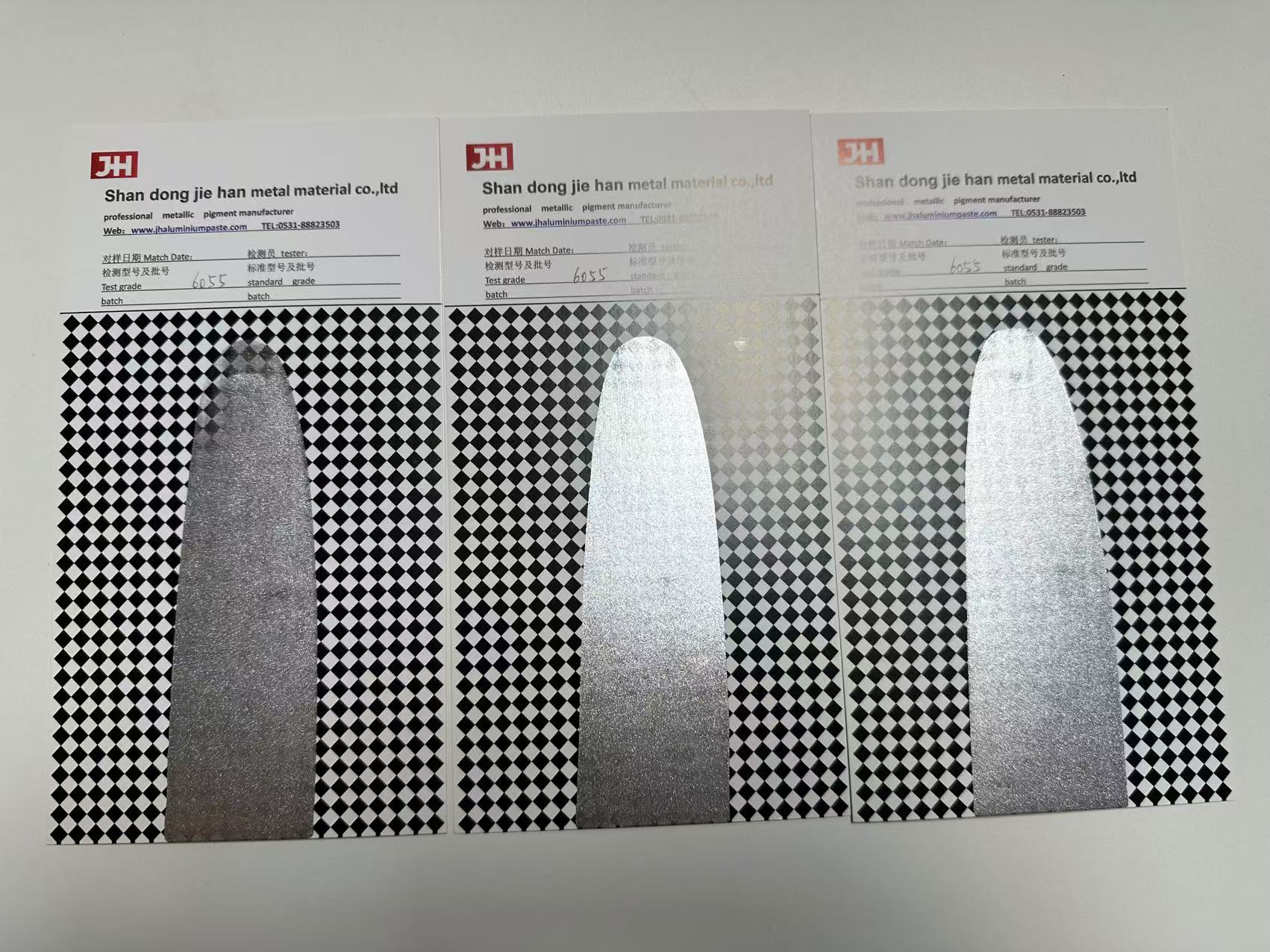
the pain points in the entire dispersion process of aluminum silver pastes
1.
Excellent metal effects start with the raw materials and are achieved through dispersion. As sheet-shaped metallic pigments, aluminum silver pastes are extremely sensitive to dispersion conditions. A slight mistake can lead to problems such as loss of gloss, pitting, sedimentation, and roughness. Today, we have thoroughly analyzed the pain points in the entire dispersion process of aluminum silver pastes, aiming to help stabilize production and enhance the texture.
Improper pre-treatment of aluminum silver paste: The aluminum sheets were directly fed into the high-speed disperser, resulting in the sheets being crushed and deformed by the shear force. How to correctly perform pre-dispersal (pre-soaking/pre-gelation)?
Incorrect feeding sequence: Should the aluminum silver paste be added first or the resin? When should the solvent be added? What problems will result from the incorrect sequence, such as uneven dispersion or particle agglomeration?
Solvent compatibility issue: The solvents used (such as alcohols and ethers in water-based systems, and aromatic hydrocarbons in oil-based systems) do not match the carrier solvents of the aluminum silver paste, resulting in the precipitation and thickening of the paste. How to choose?
2.
Dispersion equipment and process
Equipment selection error: Should a high-speed dispersing disc (blade) or a sand mill be used? Why does high-speed shearing easily damage the aluminum sheet structure, produce black dust, and reduce gloss?
Control of dispersion speed and time: If the speed is too low, it cannot break up the agglomerates; if it is too high, it will damage the aluminum sheet. How to determine the optimal process window?
Temperature: High-speed dispersion leads to excessively high system temperature (especially for oily systems), rapid solvent evaporation or premature resin reaction. How to control the temperature?
3.
Compatibility of formulation and system
Resin acid value/polarity conflict (especially in oily systems): High acid value resin reacts with the fatty acid on the surface of the aluminum paste, resulting in thickening and gelation. How to solve this problem by selecting the resin or adding a neutralizing agent?
Water-based system pH value sensitivity: Aluminum is a dual-valent metal. In strong acid (pH < 4) or strong base (pH > 10) water, it will react vigorously to produce hydrogen (a safety hazard) and turn black. How to stabilize the pH within the safe range of 7-9?
Water contamination (oil-based system): A small amount of water is mixed into the system, causing the surface of the aluminum paste to oxidize, turn black, and lose its luster. How to strictly prevent moisture?
Adhesive "poisoning": Some leveling agents and defoaming agents (especially those of the silicone type) are incompatible with aluminum sheets, resulting in pinholes and uneven distribution. How to select the adhesives?
4.
Dispersion effect and storage stability
Coarse separation/settling: After storage, the well-dispersed system forms hard precipitates that cannot be re-blended. Is this due to incomplete dispersion or the failure of the anti-settling system (such as gas-phase silica, polyethylene wax, etc.)?
Metallic effect weakened / turning gray: The final paint film lacks luster and appears in a dull color. Is this caused by the fragmentation of the aluminum sheet, or is it due to poor transparency of the system, or the disorderly arrangement of the aluminum sheets?
Directional alignment issue: After spraying, the aluminum sheets failed to be arranged parallel to the substrate, resulting in uneven gloss and poor brightness. How can this be controlled by adjusting the solvent evaporation gradient, resin, and rheology additives?
Color floating/bleeding: When used with colored pigments, the aluminum paste separates from the pigments, resulting in an uneven and mottled appearance. How can the compatibility be improved?
5.
Safety and Construction
Safety: When dispersing the oily system, how can we effectively ensure ventilation, prevent static electricity, and avoid the explosion of aluminum powder dust?
Construction foaming: Especially in water-based systems, excessive air bubbles are entrained during the dispersion process, resulting in pinholes during spraying. How to optimize the degassing process?
6.
Summary of Core Troubleshooting Approach
When a scattered issue occurs, the following sequence can be followed for troubleshooting:
Aluminum sheet itself: Has it been damaged or oxidized before being dispersed?
Compatibility: Are the resin/solvent/additive compatible with the aluminum paste carrier?
Process: Are the equipment, sequence, speed and temperature appropriate?
Formula: Does the overall acidity and alkalinity, polarity, and rheological properties of the system support the stable and directional arrangement of the aluminum sheets?